
It started with ent.
No, not Tolkien’s trees.
I’d been writing the first draft of the then-untitled Between Two Worlds in standard contemporary British English. And then a character — probably Pod, the protagonist and narrator — said something like “I ent sorry.”
(I know, it was me doing the thinking and writing. But sometimes characters take over your fingers.)
The ent was Pod’s version of ain’t, an informal form of is not (or are not, or am not). He was saying “I ain’t sorry” or more formally, “I am not sorry.”
I mulled on that word ent for a while.
It crystallised a drizzle of a thought at the back of my head.
Between Two Worlds is set thousands of years in the future aboard a generation ship that’s been isolated for much of that time. Language evolves, and even ignoring how English might change between now and the launch of the ship, its inhabitants would arrive at their destination speaking a very different language — or languages — than we would understand.
Books take liberties with this all the time, for good reasons.
I wanted to play with that a little, and lean into the effects of time on language, much like Russell Hoban did with Riddley Walker. And I wanted to try to avoid it sounding too much like it was written in the 2020s, conscious that Asimov and Clarke wrote about deep futures suspiciously like the 1950s, full of female secretaries and smoking and white people. (Nothing dates like the future, so no doubt I’ll fail here.)
And so the ent broadened into a dialect, and kept broadening as I wrote and as I revised.
Not so broad as to be unreadable. Broad enough to feel tangibly different.
Here’s an example — the very first sentence of the book:
The guy who gonna tumble my life, he kicks dirt near the lock to the grey flat dome of Peba academy.
Definitely not standard contemporary British English. Definitely triggering to any grammar checker or passing pedant.
This constructed dialect of Between Two Worlds is called Capricorn Basic – Capricorn is the name of the generation ship – and everyone speaks it.
I’m not going to list all the words and rules that make up Capricorn Basic. Where’s the fun in that? I will say that there are rules – some of them baked into my fingers – and many deliberate choices. For example, I’ve had fun with the well-known linguistic change called rebracketing. In Capricorn Basic, an ankle has become a nankle, and an ant has become a nant.
Some other simple changes: instead has shortened to stead, and everyone to evrun.
Distances are in cems and kims. Masses are in kigs. Time is measured in millis, secs, mins, and nours (not hours) — but there are also ticks.
You’ll pick it up. The diagrams at the front of the book will help you with some of the specific terminology like spinward, spoutward, narv and sove. I’ll post those diagrams here soon.
I mentioned in a previous post how Orwell’s Nineteen Eighty-Four was one of the inspirations for Between Two Worlds. The static and mobile balls on Capricorn, which watch and listen and assign work, echo Orwell’s ubiquitous surveillance. Nineteen Eighty-Four also has newspeak: the state tries to manipulate understanding by engineering language. Capricorn Basic isn’t an engineered language in that sense. However, words absolutely have power, and the dialect reflects that (he writes vaguely).
Perhaps the most fascinating aspect is that despite the constraints of the dialect — and it can be very constraining — it is also very freeing, and occasionally poetic. People listening hard have ears up. Low light is whisper lux.
My favourite part, though? The imagery of the monkey in his tree. One of Pod’s cabinmates, Aerial, mentions the monkey in the second scene of the book. As with Pod’s ent, I have no idea where it came from — but I instantly understood it and loved it, and used it throughout the book in various forms. It’s the piece of dialect I’m most proud of and my greatest wish is that, somehow, it catches on.
I gonna hope, is it.
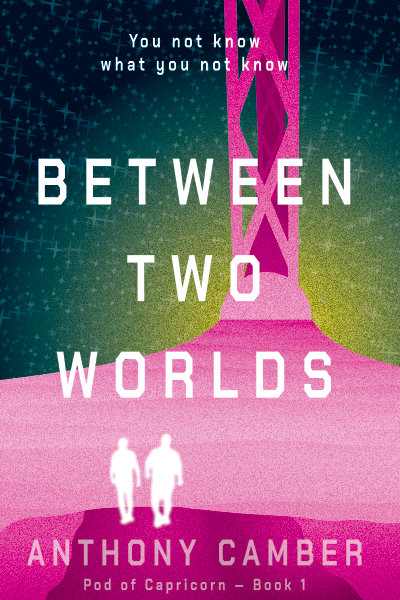
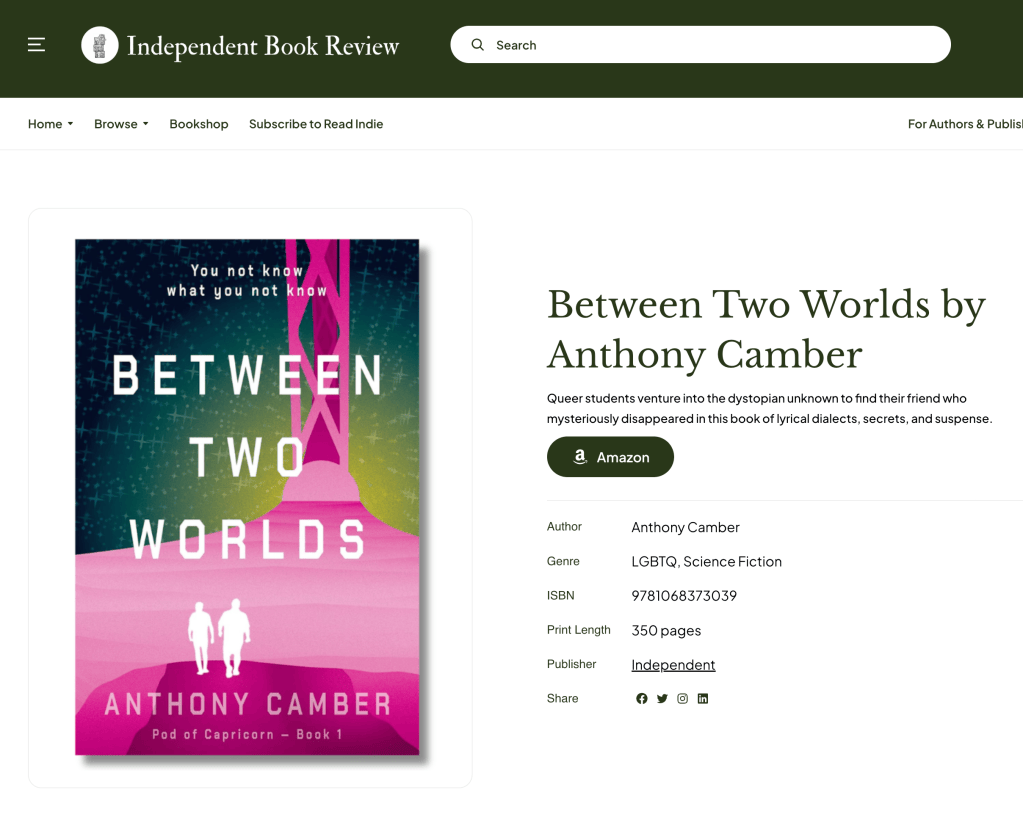
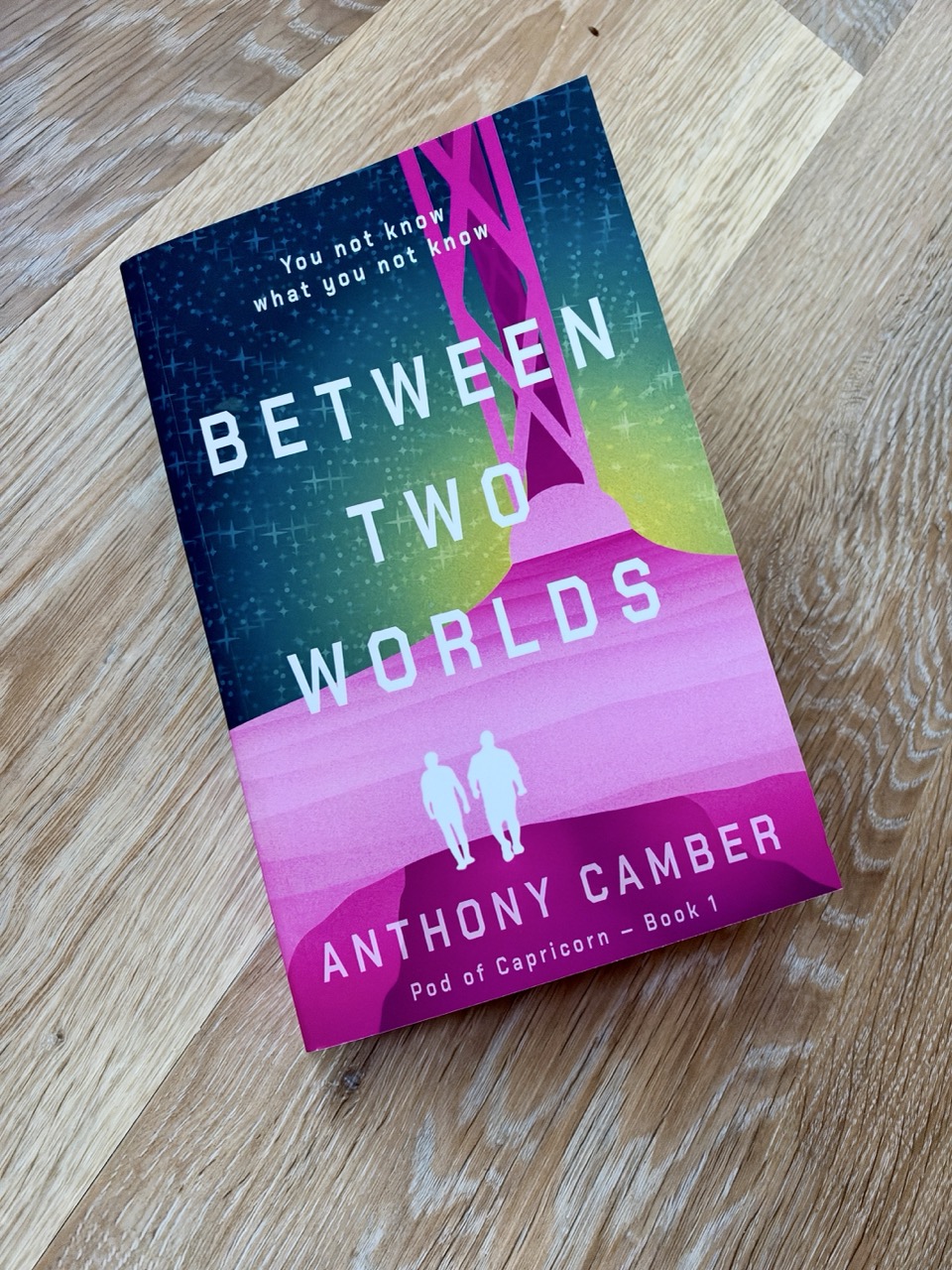
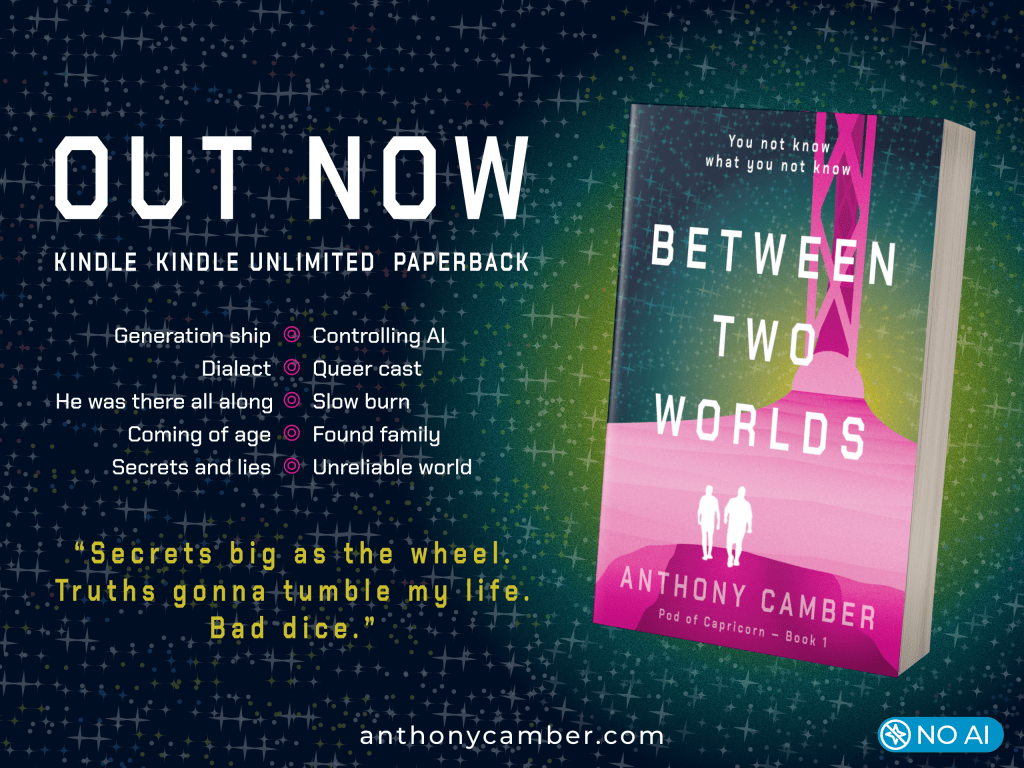
Between Two Worlds is available from September 1, 2026 for Kindle and Kindle Unlimited, and in paperback.
Preorder for Kindle: UK USA Canada Australia Germany France Spain Italy Netherlands Japan Brazil Mexico India
If you have any questions about the book, or anything you’d like me to write about on the blog, let me know in the comments.







Leave a Reply