Repeating Year 13 was supposed to fix everything.
It did not fix everything.
But supernovas create as well as destroy.

The short version: Nate + Luke = Nuke = BOOM! A-level exams ruined, and school suggesting we rewind and try again.
It’s a simple experiment in theory: change the inputs, get better outputs. Luke had shifted from constant to unknown, a glittery question mark. Was he the change I needed to make?
Enter Preston, with his velvety calm and his don’t-say-adorable ears and his own complications. Someone from his past unable to let go. Another variable to manage, somehow.
Some orbits, it turns out, are unstable. Apply the right forces in the right places, and you can fix them. But if you get it wrong, you can blow everything apart.
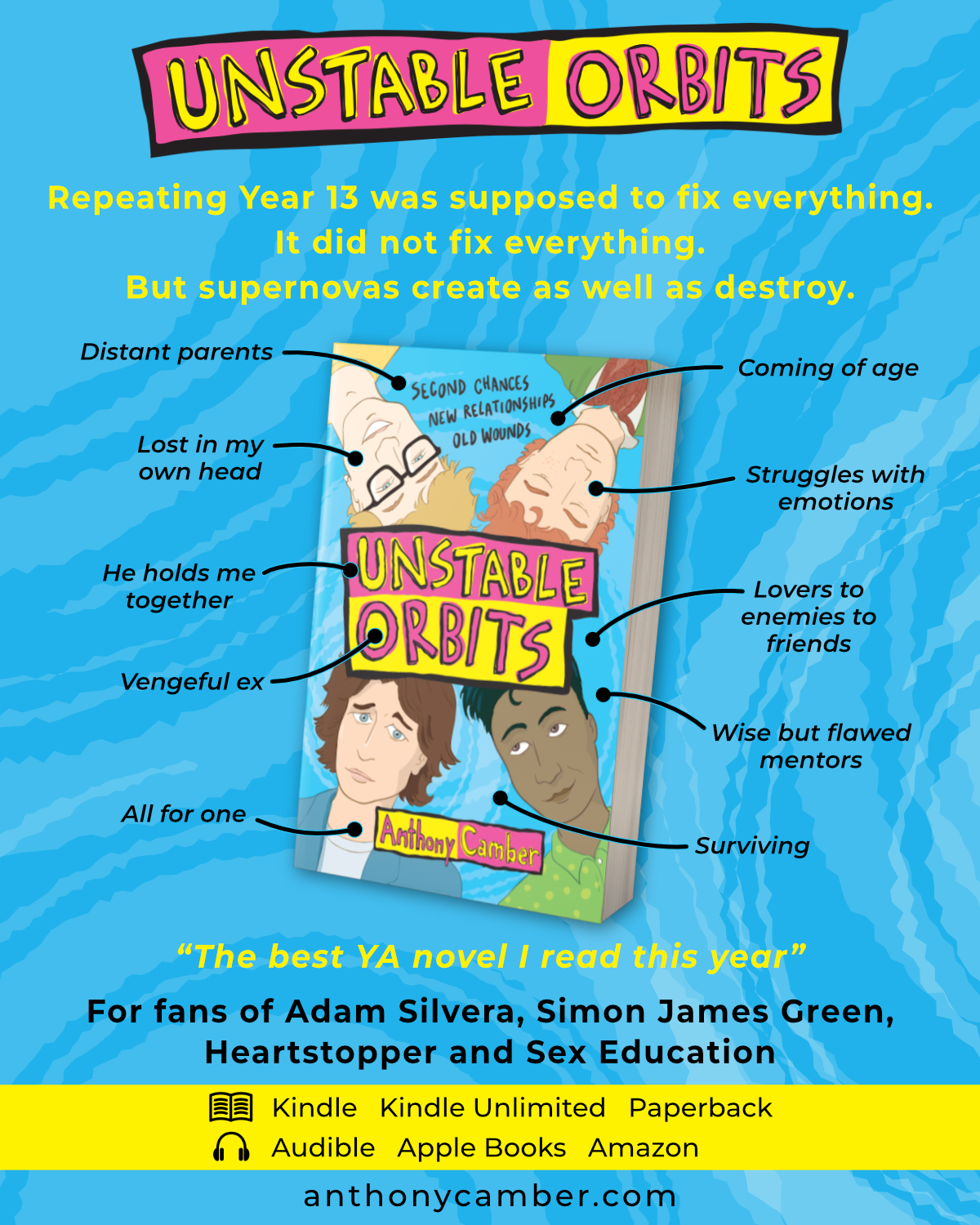
Unstable Orbits is a queer coming-of-age comedy-drama about love, found family and mental health. It’s packed with sharp humour and heartfelt moments, plus a little light physics. Perfect for fans of Adam Silvera and Simon James Green, and for everyone who loved Heartstopper and Sex Education.
#2 bestseller in teen and young adult LGBTQ+ literature on Amazon UK
#4 bestseller in fiction about LGBTQ+ issues for young adults on Amazon UK
#4 bestseller in LGBTQ+ fiction for young adults on Amazon UK
Review quotes
“[T]he best YA novel I read this year” — Beta reader Roger Hart (from his review of the year’s books)
“Nate is one of the most relatable characters that I’ve personally read” — Beta reader Dani (see full review)
“This is an amazing book … I fell in love with so many of the characters” — ARC reader Serena Pridgen (see full review)
“I didn’t want the story to come to an end” — QueenB, Verified Purchase (see full review)
“I totally fell in love with this book and these boys. What a gorgeous thing… Consistently clever and inventive and kept me smiling until I laughed.” — Chase Hackett (see full review)
Available now
Kindle Unlimited
audiobook
audiobook
audiobook

Details
- Published June 15, 2026 – ebook, paperback
- Published May 12, 2026 – audiobook
- 93,000 words
- 380 printed pages
- 10h 46m duration
- Amazon Kindle ASIN: B0DXFJQ3B5
- Paperback ISBN: 978-1-0683730-0-8
- Audiobook ISBN: 978-1-0683730-2-2
Reading trackers
FAQ
This text appears in the ebook and paperback formats, but not the audiobook.
UK educational facts and jargon
School years run from September to July, and contain three terms: Autumn term (September to December), Spring term (January to Easter) and Summer term (Easter to July). Major exams take place each May and June. Summer holidays fill the gap between school years.
Year 1, 2, etc. Children start their first term in primary school in Year 1 aged 5. At the start of each Autumn term they move up a year. Schooling is compulsory until the end of Year 11 (aged 16), with Years 12–13 optional.
Primary education occurs in primary schools between Years 1–6 (ages 5–11) and provides foundational learning skills.
Secondary education occurs in secondary schools between Years 7–13 (ages 11–18), with Years 7–11 compulsory. It provides subject-specific education, with core subjects like English and Maths until Year 11.
Sixth form, a historical term still in use, refers to Years 12 and 13 when students study for A-levels. Not every school offers a sixth form; there are also independent sixth form colleges. Typically, schools treat sixth-form students more like adults: for example, removing the requirement to wear a uniform.
GCSE. An academic qualification. Students take GCSE exams typically aged 16 at the end of Year 11. Each GCSE covers a specific subject (Maths, English Language, French, and so on). Students will say, for example, “I have nine GCSEs”. “Good GCSEs” allow a student to move on to A-levels if they want.
A-level. An academic qualification (“Advanced level”). Students typically study for three A-levels during Years 12–13 (ages 16–18). Results are graded A*/A/B/C/D/E, or U for ungraded (fail). “Good A-levels” allow a student to move on to higher education at university if they want. Students apply to specific courses at specific universities during sixth form, attend interviews, and may receive a conditional offer — for example, BCC. Their place on that course is guaranteed if they reach those grades: in this example, B or better in one A-level, and C or better in two.
Clearing. A process after A-level results are out to allow students to find university places even if their grades didn’t meet any of the conditional offers made.
Maths. Mathematics. It’s plural.
PSHE. Personal, Social, Health and Economic education. A “life in the real world” subject, including sex and relationship education.
How old…?
16: The age of consent for sexual activity, regardless of gender or sexual orientation.
17: The legal driving age. New drivers have a provisional driving licence and are subject to certain constraints until they pass a driving test, which has both theory and practical components.
18: Adulthood. Full legal rights, including buying and consuming alcohol.
How do I pronounce…?
Ebeham: EE-buhm. In IPA: /ˈiːbəm/. This is the fictional town in which the story takes place, about an hour by bus west of the non-fictional Swindon. Likely not far from New Zealand (not that one).
PSHE: Either each letter separately, or PEE-SHE /pˈiːʃˈiː/.
Content notes
This book includes themes and activities that some might prefer not to read. These include violence, the use of alcohol, mental health issues, sexual activity, strong language, bullying, toxic relationships, references to drugs, references to vaping, and feelings of parental neglect.
There is mild, accidental racism and mild misogyny.
There is no homophobia, transphobia, xenophobia, religion, or cigarette smoking.
More detailed information, revealing aspects of the plot
Contains
- Knife violence, with blood references and associated mental trauma
- Alcohol use, including drunkenness and vomiting
- Struggles with mental health, especially exam stress
- Typical British swearing
- Sexual activity (not explicit) between teenagers of legal age
- Bullying
- Toxic relationships
- References to drugs
- References to vaping
- Feelings of parental neglect
- Mild, accidental racism, recognised and handled appropriately
- Mild misogyny, criticised
Acknowledgements
This text appears in the ebook and paperback formats, but not the audiobook.
This book had a long inception. It started as vague noodling on the broad, nerdy themes of “off-by-one errors” and Newton’s three laws of motion — inertia, force, reaction — and grew into 60,000 words written in longhand using an Apple Pencil in the Goodnotes app on my iPad. And it was then abandoned unfinished, because my brain insisted everything was wrong and the book needed a rethink.
My brain was annoyingly right, and to help me fix the brokenness it diverted me onto writing a different book entirely. When I returned to Unstable Orbits two years later I could see the problems and the promise. Typing up 60,000 words of handwriting was (painful and) a great initial edit and convinced me I needed to rewrite part 2.
First acknowledgements, then: to my brain, and to time’s relentless flow for the precious gift of perspective.
More traditionally, I’d like to thank my beta readers: Mike, Caz, Roger, Danielle and Vicki. Your thoughtful and encouraging comments made the book so much better. Any remaining nonsense is entirely my fault.
Also, thanks to Rowan and Ellery for patiently answering my questions about school life in 2025, and for giving me the marvellous word vapist.
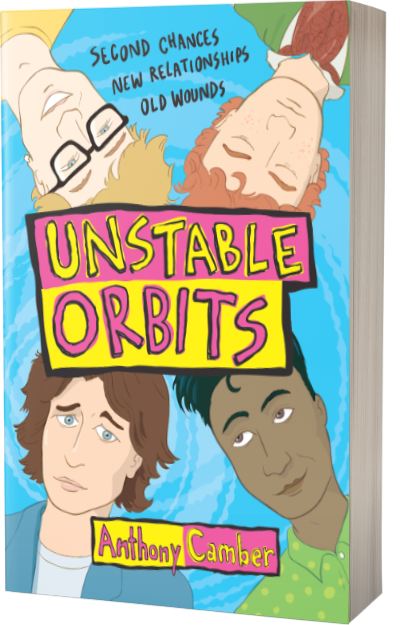
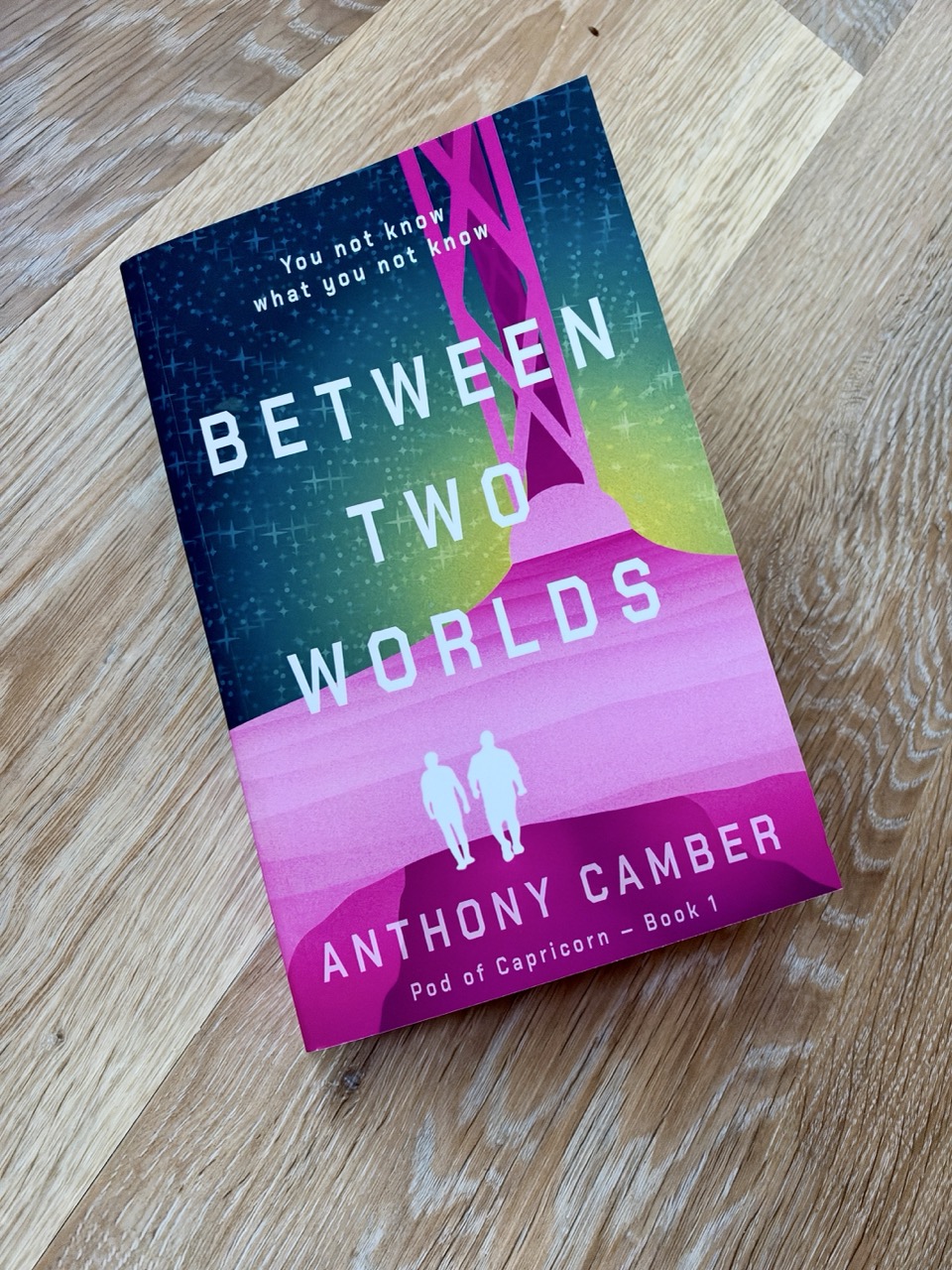
I’m extremely grateful to Blogshank for the fantastic front cover: thanks for tolerating my stupid ideas and rubbish sketches.
And thanks to my family, and to Ali, Stan and Gus, for your love and support.
I took my A-levels a long, long time ago now. It was a stressful couple of years: travelling to university interviews (Salford one day, Kent the next), and mock exams, and the constant sense (whether right or wrong) that everything you did or didn’t do would shape your whole life.
The knowledge that one bad exam could ruin all your plans.
But also, there was recklessness: according to the diary I kept sporadically in those days, I stayed up until 2am watching TV coverage of the UK General Election before a 9:30am Physics A-level paper. What was I thinking?
I also remember the kindness and generosity of my teachers.
I remember Mr Machin, who lent me a school computer for the weekend — the day after he first met me — when I joined the school aged 14.
I remember Miss Corby, and secretly enjoying reading Shakespeare out loud even though I went on to fail my English Literature O-level (sorry again).
I remember Miss Heppell, her coffee, her wry smile, her unflappability, and her mnemonic: Tramps demand Queen Victoria’s Rolls-Royce for a penny.
I remember Mr Evans, who told me I was doing the wrong A-levels — “If you were my son, you’d be doing Further Maths” — and he was right, and it changed my life for the better.
I remember Mr Stern, who told us of his exploits in Royal Navy submarines, who believed in my abilities and championed me. Silly Old Harry Caught A Hot Tomato Over Algeria.
I want to thank all of them, and others. I wouldn’t be here without them.
Media files
You can use these images in any review or post about the book. Do not link to the images on this site, or use low quality versions or screenshots of them. Click to open in a new tab.