
I’m in the middle of an experiment with Unstable Orbits. For the first time, I’m trying out advertising — on Meta. UK users of Facebook and Instagram, if they have certain attributes (they read Young Adult ebooks, etc) might see an ad for the book. If they click on the ad they’ll be magically transported to the Amazon UK product page, where they’ll hopefully buy the book.
Why am I doing this?
Ultimately, I’m looking for sales. Ideally, regular sales that keep the book in the top 10 in the most important bestseller lists. When a book is high in a list it gains organic sales, and stays in that list — creating a virtuous circle. And sales result in reviews, and reviews result in sales. Another virtuous circle!
That’s the theory.
But there’s a funnel involved here.
poses thoughtfully because he read a web page about marketing and is now an expert
To get sales, you need to drive people to the product page. And on that page, you need to give them a reason to buy. So I’m testing two things:
- Which adverts work best for this book?
- Does the book’s blurb convince people to buy?
There’s no substitute for data. Without data, I’m guessing. Sure, I’m relying on advice from blog posts and articles and TikToks, and it might be sage advice — but I still have to apply it correctly.
Which ads work best?
The plan was to use three ad “creatives” — three different ad images and copy (text). Here they are:
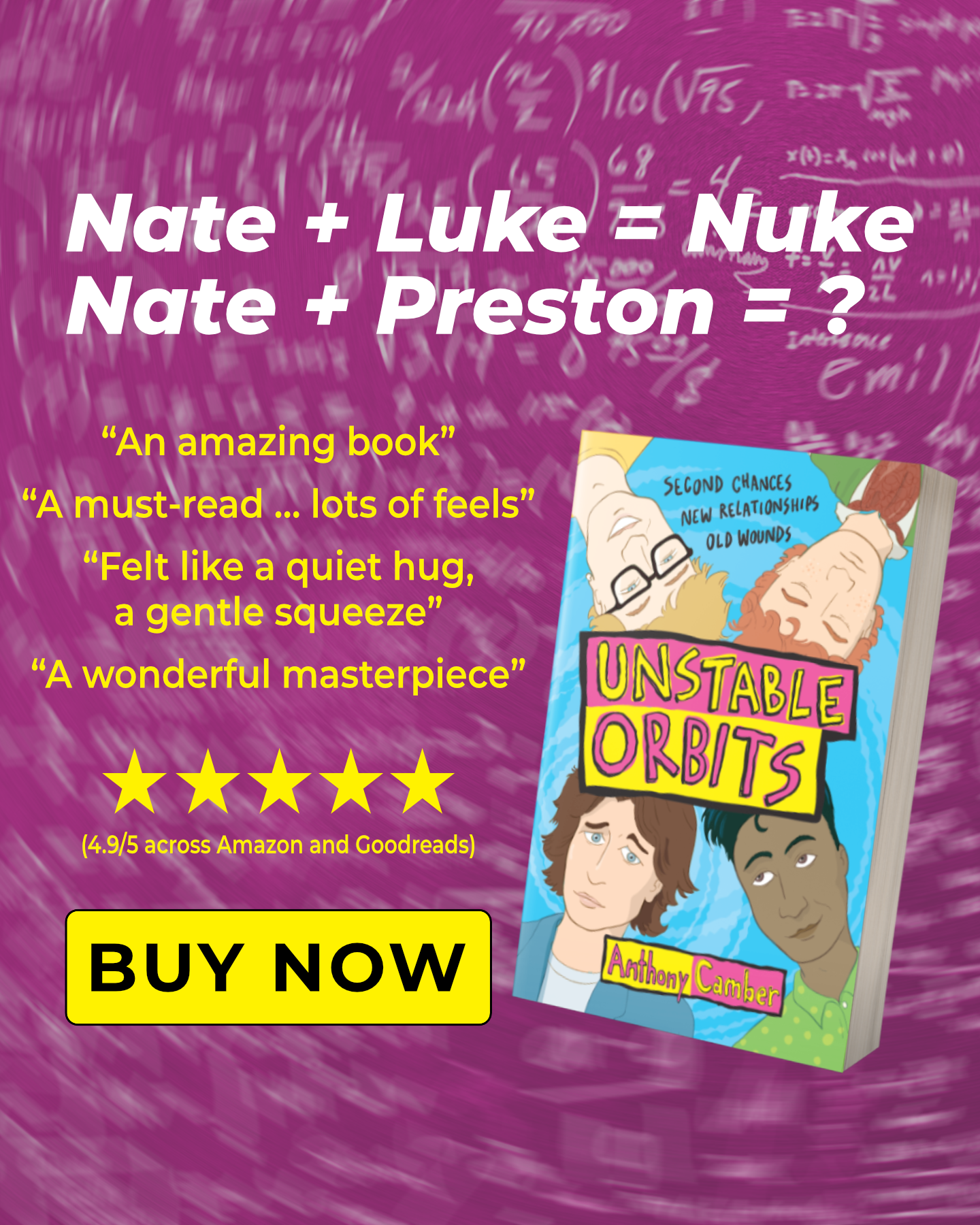


(These are called ad 1, ad 4, and ad 8, because that’s how I numbered them in my original list of ad ideas.)
I produced three variants of each ad, at different aspect ratios for different ad slots: 4:5 (also works cropped to 1:1), 9:16, and 1.92:1.
I hoped that over the lifetime of the experiment it would become obvious if one of these creatives worked better, or if one of them didn’t work at all. I could then, in theory, refine the best performers for any later advertising.
Meta’s analytics would show me which ads work best, using metrics such as impressions (how many times an ad’s seen) and clicks (how many times an ad’s clicked). There’s also the click-through rate (CTR, which is clicks / impressions). The consensus appears to be that a CTR above 2% is “good”: if you get more than two clicks for every 100 views, you’re doing well.
Naively, I thought Meta would show the different creatives in roughly equal proportions and gradually focus on the better-performing ones. In reality, it doesn’t seem to do that. It might be running little mini-experiments with different demographics, and things like that. It’s a mysterious beast and the advice is “do not prod”. Let it do its business.
After about a week of the experiment, a winner was obvious: ad 8, with a CTR of 6.27%. Meta had stopped displaying the other two ads entirely.
However, there was a problem.
Someone left a comment on ad 8, asking if the book was about someone cheating on their boyfriend. It isn’t, but I could see how the text of ad 8 — a quote from the book — might give that impression.
People were clicking on the ad, but was it misleading them?
I didn’t want to trick anyone into clicking on an ad, or buying the book. I took the decision to replace that ad. And as the other two ads weren’t working, at least relative to ad 8, I decided to replace all three ads.
Here are the replacements:

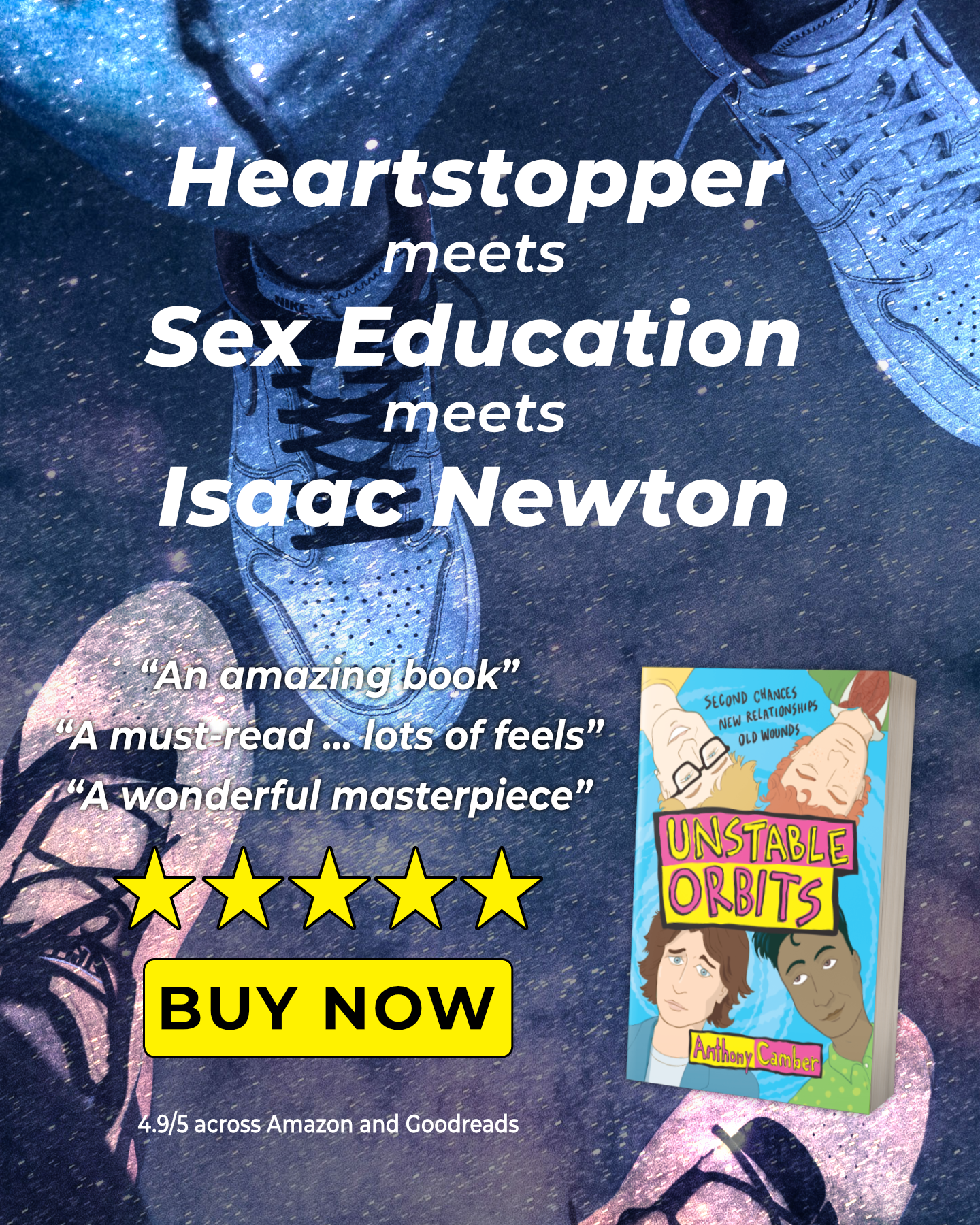

These creatives have been live for a couple of weeks now.
The best performer is currently ad 6, at 2.69% CTR. Next is ad 3, at 2.09%. Sadly nowhere near the 6.27% of ad 8! (Maybe I should produce a variant of ad 8 that isn’t misleading, and see what happens. I’m thinking about it, as well as other ad ideas.)
How many clicks lead to sales?
It’s harder to tell than you’d think.
Amazon provides a correlation mechanism: a unique attribution ID that’s part of the URL you give to Meta as the click-through destination. In theory, every ad click with that ID should be recognised by Amazon, and if there’s a resulting sale, that’s recorded too.
However, the numbers don’t exactly match up. Amazon has recorded a third more clicks than Meta. You’d think counting clicks would be a solved problem these days, but apparently not. Which goliath should I believe? No idea. I haven’t dug into why there’s a difference. I presume there’s a good reason that isn’t “everything is full of bugs” but also I do know that it’s software and so everything is full of bugs.
To illustrate the confusion, here’s some data:
- Amazon’s correlation ID data suggests just under 1% of ad clicks converted to a sale
- Amazon’s overall sales data suggests about 2% of ad clicks converted to a sale
- Meta’s metrics suggest just under 3% of ad clicks converted to a sale
Those first two bullets show another velvet spanner in the works: I’ve had more sales during the period of the experiment than Amazon has associated with the attribution ID. Completely organic sales are possible, for sure. It’s also possible that some people who saw the ad didn’t click on it, but went manually to Amazon and bought the book. (Some sales are paperback sales, and the ad destination is the ebook product page.)
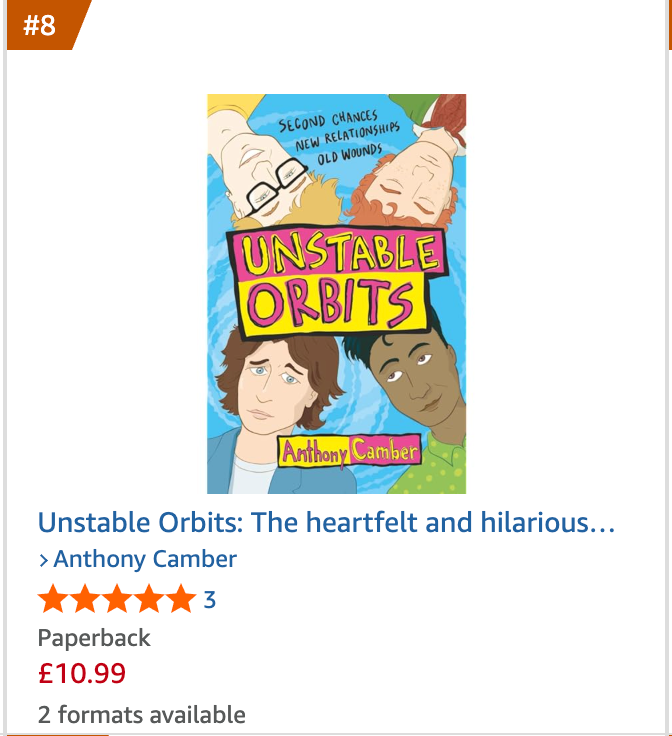
Similarly, because ad-related sales boosted the book in bestseller lists, other people might have bought the book because they saw it in a top ten. (It’s been in a top ten!)
I’m not going to overthink this: I’ll treat any sale during the period of the experiment as a sale caused by an ad, one way or another.
This is a small experiment, and it’s possible the differences would become less severe with a larger one.
Are any of these percentages good? Research (Google) suggests an ad campaign like this can initially expect a 2% conversion rate, and tweaks can improve that. I hope so: currently the experiment won’t break even.
I can certainly continue to try different ads. But there’s something else I can tweak.
Does the book blurb work?
This is part two of the experiment. Spending money on ads is pointless if people click on the ad but don’t buy the book.
People consider many factors when deciding whether to buy a book, such as:
- The cover
- The blurb (the description, typically the back of the paperback)
- The reviews (how many, average rating, content)
- The price
- Other books by the author
Two of these (price and blurb) are easy to experiment with. I don’t want to change the price at the moment, but I’m happy to change the blurb.
Here’s the original blurb at publication:
Second chances. New relationships. Old wounds. Physics never prepared Nate for this.
Nate thought repeating Year 13 would let him ace his A-levels, dodge the drama, and avoid the mistakes (the draining, angry, Luke-shaped ones). But with familiar places full of unfamiliar faces, being back at school won’t be easy — especially with Nate’s head raging a constant battle between the laws of motion and emotion.
Then he meets Preston — and the attraction is more than gravity. Maybe things won’t be so bad after all. But school — and Luke’s unstoppable force of nature — have a way of throwing everything out of balance. Between Luke’s presence, Preston’s tangled past with another student, and his own spiralling anxiety, maybe Nate should plot a different trajectory?
With exams looming, friendships shifting, and his mental health taking a nosedive, Nate must stabilise his own orbit — or risk his academic dreams and his chance to find real happiness.
Packed with sharp humour, heartfelt moments and a little light physics, Unstable Orbits is a queer, geeky coming-of-age story about love, friendship and second chances, perfect for fans of Alice Oseman, Simon James Green and Isaac Newton.
Is that a good blurb or not? Honestly, I don’t know. Like most authors I dislike writing blurbs — we’re far too close to the source material, and it’s easy for a blurb to become a synopsis. I’m happy to believe I’m not very good at creating them. For this text I spent a while iterating on ideas with endless refinements, and I imagine it’s overwritten.
Thankfully, time gives and she takes. I have enough distance from the blurb now to happily jettison any or all of it, if I can do better.
I’ve gone back to first principles and replaced the blurb with this text:
If they stay together, it could happen again.
If they break up, anything could happen.Nate and his boyfriend Luke crashed and burned in their exams, and Nate’s dream of studying astrophysics was shattered: until their school said they could repeat Year 13 – together.
Nate wants to do things differently second time around. Luke… not so much. And when Nate meets Preston, the attraction is more than gravity.
But Luke’s possessiveness and Preston’s complicated history threaten to overwhelm Nate’s mental health. As exams loom, Nate must stabilise his orbit – or risk losing everything.
Unstable Orbits is a queer, geeky coming-of-age comedy-drama perfect for fans of Alice Oseman, Simon James Green and Isaac Newton. If you enjoyed Heartstopper and Sex Education, you’ll love Unstable Orbits.
It’s a story of love, friendship and second chances, and it’s packed with sharp humour, heartfelt moments – and a little light physics. Grab Unstable Orbits now!
It’s shorter and communicates the core story and stakes more clearly. It loses a line I’ve always liked (“laws of motion and emotion”) but I’m prepared to sacrifice that line to improve the blurb overall.
This new blurb might convince more people who see the product page to buy the book. I don’t know. It’s been in place for a day: let’s see what the data tells me.
All hail the spreadsheet
There’s an old adage from screenwriter William Goldman: “Nobody knows anything.” It’s often misinterpreted as “everybody knows nothing” but that’s not what it means. It’s saying: everyone has hunches, and experience, and wisdom, and hypotheses, and anecdotes, but nobody knows for sure. The data will often, will usually, laugh in your face and kick you down the stairs.
The experiment will continue for another two weeks. I’ll see what I can learn, and I’ll report back. Wish me luck!



 Anthony Camber
Leave a reply to Roger Cancel reply